Does an overnight CGM reading of 3.8 mmol/L prove hypoglycemia?
You asked: My CGM showed 3.8 mmol/L overnight, but I felt fine. Does that prove I have hypoglycemia?
My CGM showed 3.8 mmol/L overnight, but I felt fine. Does that prove I have hypoglycemia?
Researched
No. One CGM reading of 3.8 mmol/L (about 68 mg/dL), especially when you felt well, does not by itself prove that you have a hypoglycemic disorder.
For people treated for diabetes, a glucose value at or below 3.9 mmol/L (70 mg/dL) is an alert level. It deserves attention because glucose may fall further. A value below 3.0 mmol/L (54 mg/dL) is considered clinically important hypoglycemia. [1]
But a CGM measures glucose in the fluid under the skin, not directly in blood. Its value can lag behind blood glucose and can sometimes be inaccurate. An overnight low may be a compression low: pressure from lying on the sensor temporarily produces a falsely low reading. This often looks like a sudden drop during sleep and improves after you change position. [2]
For someone without diabetes or glucose-lowering medicines, clinicians generally diagnose a hypoglycemic disorder only when Whipple’s triad is documented:
- symptoms or signs consistent with low glucose;
- a low plasma glucose result; and
- symptoms improving when glucose is raised.
A low sensor number without symptoms does not meet those criteria. A clinician may need a laboratory plasma-glucose measurement during an episode to investigate unexplained hypoglycemia. [3] [4]
What to do if it happens again
- Check your CGM trend and the sensor site. If you were lying on the sensor, change position.
- Confirm with a finger-stick meter when you can, especially if the result is unexpected, you have no symptoms, or it would change what you do. CGM education guidance specifically recommends a meter check for a suspected compression low or when symptoms and sensor results do not match. [2]
- If the finger-stick confirms a value below 3.9 mmol/L, follow your own diabetes plan. A common approach is 15 g of fast-acting carbohydrate, then recheck in 15 minutes. Examples include glucose tablets, glucose gel, or about 120 mL (½ cup) of juice or regular soda. Repeat if still low. [2]
- Do not change insulin, pump settings, or other glucose-lowering medicine based on one uncertain reading unless your prescribed plan tells you to do so.
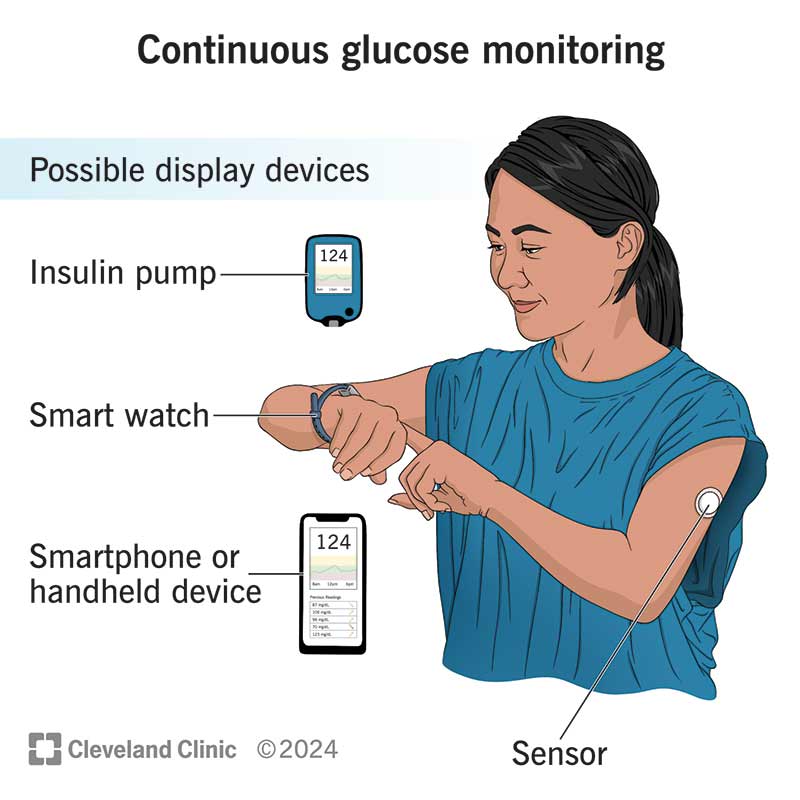
Treat a low reading as potentially real if you have shaking, sweating, fast heartbeat, confusion, dizziness, or trouble waking. Get emergency help if there is a seizure, unconsciousness, severe confusion, or inability to swallow safely; another person may need to give glucagon if it has been prescribed. [1]
Contact your diabetes clinician promptly if confirmed overnight lows recur, if readings are below 3.0 mmol/L, or if you use insulin or a medicine that can lower glucose. Bring the CGM overnight graph and any matching meter results. That record can help distinguish a recurring true low from sensor compression.
Sources
- 1.ISPAD hypoglycemia guidance ispad.org
- 2.UAMS CGM guide medicine.uams.edu
- 3.Endocrine Society guideline profiles.wustl.edu
- 4.RACGP review racgp.org.au